
Most tidying advice assumes you will change. You will build the habit, do the fifteen-minute reset, and become someone who puts things away.
If you have tried that and it did not stick, the problem is not your discipline. It is that the system requires discipline. Systems that require discipline fail for most people, most of the time.
The alternative is to design so that tidying happens without a decision. Six designs that do this.
Design 1: reduce the number of decisions
Every item needs a home, and every home needs to be obvious. An item with two possible homes gets put in neither.
What this means in practice:
| Problem | Fix |
|---|---|
| Shoes could go in the hall or the bedroom | Pick one, remove the other option |
| Papers could go in a drawer or a pile | One tray, on the desk, always |
| Chargers live in three rooms | One charging spot, all chargers there |
| Mugs accumulate on the desk | One mug, used and returned to the kitchen |
The mechanism: a home that requires choosing is a home that does not get used. Choose once, at setup, and remove alternatives.
Design 2: make putting away easier than putting down
If putting something away takes three actions and putting it down takes one, it will be put down.
The fix: open containers, no lids, no doors.
| Conventional | Tidy-by-default version |
|---|---|
| Box with a lid | Open bin |
| Cupboard with a door | Open shelf |
| Drawer that must be pulled | Open basket on a shelf |
| Wardrobe with hanging items | Open rail, or hooks |
The trade-off: open storage looks less tidy in principle, but it is used, which is the only thing that matters. A closed cupboard full of stuff nobody puts away is worse than an open bin that gets used.
The specific case of coats: a hook by the door gets used; a coat cupboard does not. Hooks are the highest-compliance storage device that exists.
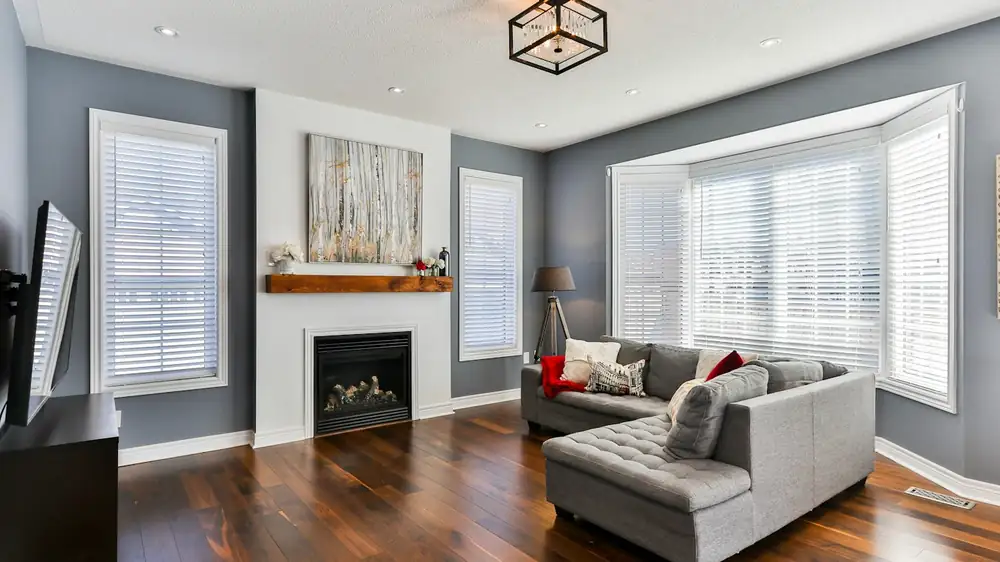
Design 3: remove the "landing zone" problem
Every flat has a surface where things land: the kitchen counter, the desk, the chair in the bedroom.
The landing zone is not a discipline problem — it is a design problem. Things land there because it is the first flat surface, and it is the first flat surface because nothing else is within reach.
The fix: put the correct home at the landing point.
| Landing zone | Correct home to place there |
|---|---|
| Kitchen counter by the door | A tray for keys, post, and a hook for bags |
| Bedroom chair | Hooks on the wall behind it, or a valet stand |
| Desk | One drawer within reach, for the things that accumulate |
| Coffee table | A lidded box, or nothing (an empty surface is used less) |
The counter-intuitive part: an empty surface attracts clutter. A surface with one tray on it does not, because the tray defines what belongs there.
Design 4: the five-second rule for putting things away
The barrier to putting something away is not effort, it is the interruption. "I will do it in a minute" is how piles form.
The rule: if putting it away takes under five seconds, do it now. If it takes longer, it needs a better home.
Why this works: it converts tidying from a task into a reflex. Tidying a flat is not one job, it is two hundred five-second actions. The people whose flats stay tidy are not doing more work — they are doing the same actions at the moment of use rather than deferring them.
Applying it: if you find yourself not putting something away, that is diagnostic. The item does not have a home within five seconds of where you are standing, and that is a design fault to fix, not a discipline failure.
Design 5: one-touch storage
An item that requires two or three actions to store will not be stored.
| Storage | Actions to store | Will it be used? |
|---|---|---|
| Open bin | 1 (drop in) | Yes |
| Hook | 1 (hang) | Yes |
| Open shelf | 1 (place) | Yes |
| Drawer with no dividers | 2 (open, place) | Sometimes |
| Box with a lid | 3 (remove lid, place, replace lid) | Rarely |
| Cupboard with a door and a shelf | 3+ (open, place, close) | Rarely |
| Bag inside a box inside a cupboard | 5+ | Never |
The principle: the number of actions predicts the compliance rate better than anything else. When designing storage, count the actions and remove as many as possible.
The folding-clothes case: this is why vertical filing works. Flat stacking requires lifting everything above (5+ actions); vertical filing is one action. The method is not tidier in principle — it is compliant in practice.
Design 6: reduce what needs storing
This is the least popular answer and the most effective. No system stores an excess of things well.
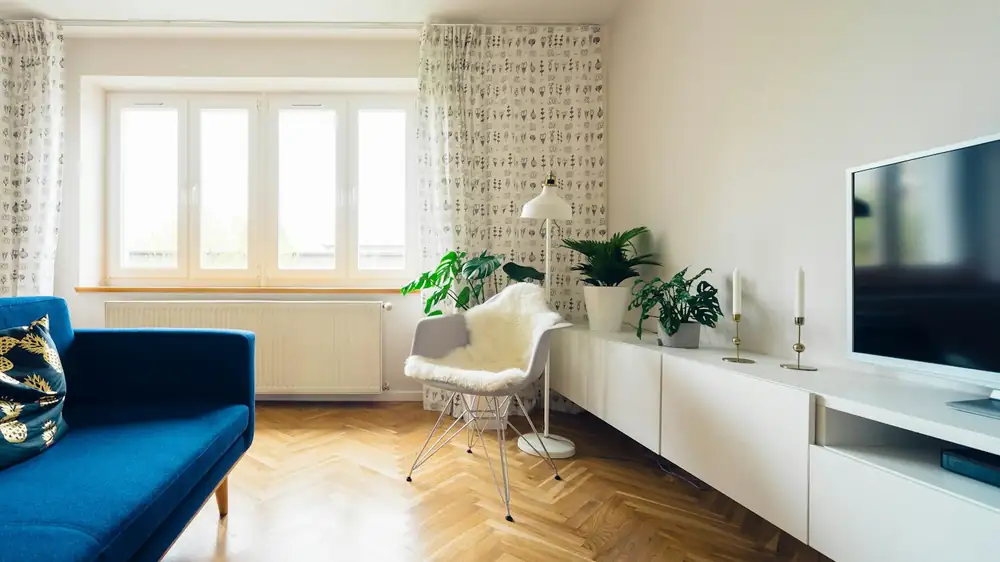
The specific numbers: a 40 m² flat for one person works comfortably with about 30–40 items of clothing, 15–20 kitchen items, and a few hundred books. Double all of that and no system keeps it tidy, because the volume exceeds the storage.
The honest test: if the flat cannot be tidied in twenty minutes, there is too much in it. Not "the system is wrong" — too much.
The minimum viable system
If you do nothing else, do these four things. They cost about $50 and require no discipline.
- A hook by the front door for coats and bags — $10
- A tray on the kitchen counter for keys and post — $10
- An open bin beside the sofa and one beside the bed — $20
- Remove one closed container that you never open — free
Those four address the landing zones, which is where 80% of visible clutter accumulates.
What does not work
| Advice | Why it fails |
|---|---|
| "Do fifteen minutes every evening" | Requires a routine; routines fail |
| "Everything in its place" | Requires deciding a place for everything |
| "Tidy as you go" | Requires noticing, in the moment |
| "Buy matching containers" | Adds steps (open, place, close) |
| "Declutter once and you will keep it up" | True for a minority |
The common flaw: all of them assume the person will change. Design assumes they will not, and works anyway.
The honest position
If you are not a tidy person, you will not become one through a routine. What you can do is make tidying the path of least resistance, which means:
- Fewer decisions (one home per item)
- Fewer actions (open containers, hooks)
- Correct homes at the landing zones
- Less to store
None of that requires discipline. All of it requires about an hour of setup and $50, and it is the only approach that works for people who have already failed at routines.