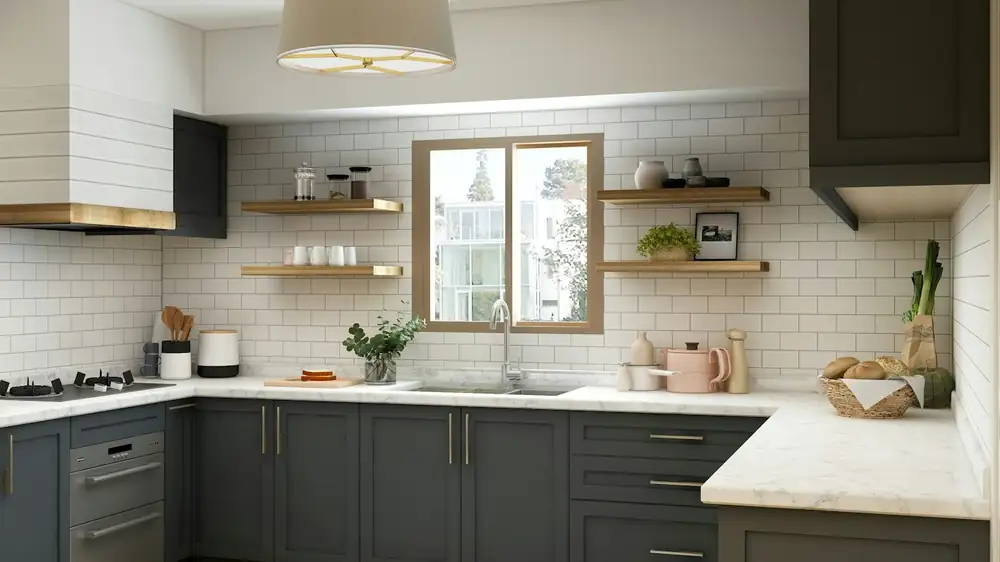
An open-plan kitchen-living room is the standard layout in small flats, and it creates three specific problems: smell, grease, and the sight of kitchen clutter from the sofa.
None of these are solved by cleaning more. They are solved by containment — managing air, surfaces, and sightlines separately.
Problem one: smell
An open-plan kitchen means cooking smells occupy the living space, and in a small flat they reach the bedroom too.
The physics: cooking releases volatile compounds and fine particles. A recirculating extractor filters some of the grease but returns the air to the room, so the smell stays.
The hierarchy of fixes:
| Fix | Effectiveness | Cost |
|---|---|---|
| Extracting fan (vented outside) | Best — actually removes air | $150–400 fitted |
| Recirculating hood with carbon filter | Reduces by about half | $80–200 |
| Window open during cooking + 10 min after | Good, if there is a window | Free |
| Air purifier with carbon filter | Moderate, slow | $100–250 |
| Candles, sprays | Masks, does not remove | — |
The realistic answer in a rental: window open, hood on, and 10 minutes of overrun. That combination removes most of it.
The timing detail that matters: the fan should run for 10 minutes after cooking, not just during. Most of the smell is released as the food cools and the pans sit.
The specific foods that defeat recirculating hoods: frying (fine aerosol), fish, curry, and anything with vinegar. For those, close the kitchen door if there is one, or cook them when windows can be open.
Problem two: grease
Grease is not just on the hob. In an open-plan layout, it travels and settles on every surface in the room — including the sofa, the shelves, and the TV screen.
The tell: a sticky film on surfaces near the kitchen, and a slight haze on glass.
The containment strategy:
| Action | Effect |
|---|---|
| Use a splatter guard when frying | Catches most airborne grease |
| Wipe the hob and surrounding surfaces immediately after cooking | Removes grease before it polymerises |
| Wipe the extractor filter monthly | A saturated filter passes grease through |
| Keep soft furnishings 2 m from the hob | Reduces deposition |
| Wash cushion covers quarterly | They absorb grease invisibly |
The splatter guard is the highest-value item — a $10 mesh guard reduces airborne grease dramatically, and it is the difference between a sofa that needs washing annually and one that needs it every three years.
The polymerisation point: grease that is not wiped immediately becomes a hard film that needs a solvent to remove. Five seconds with a cloth while the pan is still hot is worth an hour of scrubbing later.
Problem three: sightlines
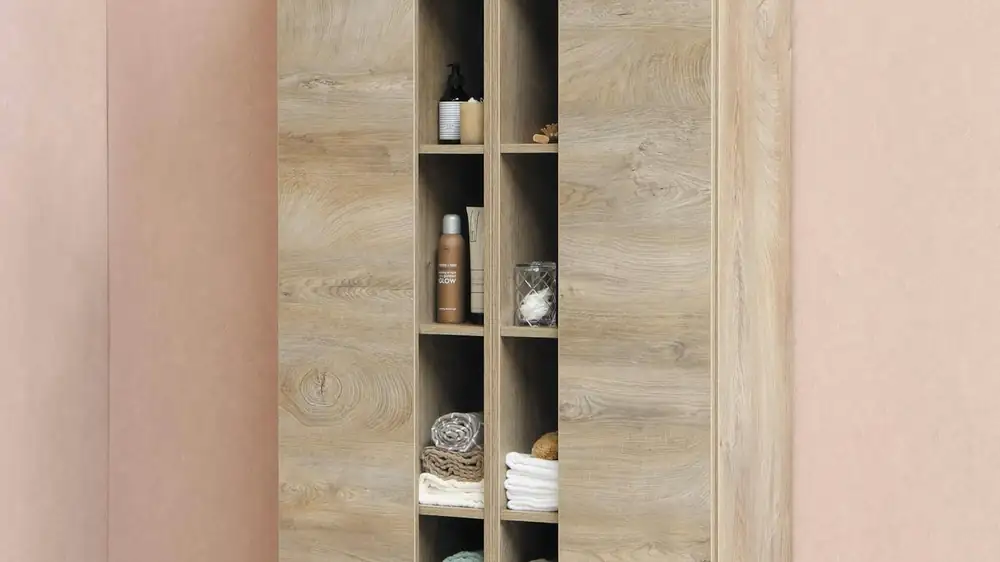
The third problem is the one that affects how the flat feels: from the sofa, you see the kitchen. And a kitchen always looks messier than a living room, because it has containers, appliances and drying racks.
The principle: manage what is visible from the seating position.
Stand or sit where you normally relax, and look at the kitchen. Whatever is in that sightline is what makes the flat feel cluttered.
What to do about each category:
| Visible item | Fix |
|---|---|
| Appliances on the counter | Store the ones used less than daily |
| Dish rack with drying dishes | A draining board with a cover, or dry and put away |
| Bin | Inside a cabinet, or a lidded bin that matches |
| Tea, coffee, condiments | A tray, or a cupboard |
| Open shelving with mixed items | Closed storage, or matched containers |
| Drying laundry | Not in the living room — bathroom or balcony |
| Recycling | A lidded bin, emptied daily |
The single biggest improvement: remove the drying rack from view. A dish rack with dishes in it is the most visually cluttering thing in any kitchen, and it is visible from every angle. A covered draining board, or drying and putting away immediately, changes how the whole room reads.
The tray trick: if items must stay on the counter, put them on a tray. A tray of four items reads as one object; four loose items read as clutter. This is not a stylistic trick — it genuinely changes how the eye parses the surface.
The layout that works
For an open-plan space with the kitchen along one wall:
 ┌─────────────────────────────────────────┐
 │  KITCHEN WALL                            │
 │  ┌──────┐ ┌──────┐ ┌──────┐             │
 │  │ hob  │ │ sink │ │ prep │  ← 60cm clear│
 │  └──────┘ └──────┘ └──────┘             │
 │  ═══════════ counter ═══════════        │
 │                                          │
 │        (1.2m clear walkway)              │
 │                                          │
 │  ┌────────────┐        ┌──────────┐     │
 │  │   SOFA     │        │  TABLE   │     │
 │  └────────────┘        └──────────┘     │
 │        ↑ sightline from here             │
 └─────────────────────────────────────────┘
The key measurements:
| Measurement | Minimum | Why |
|---|---|---|
| Walkway between counter and sofa | 1.2 m | Chair pull-out plus passage |
| Clear counter for prep | 60 cm | Cooking needs it |
| Distance from hob to nearest soft furnishing | 2 m | Grease deposition |
| Height of items on the counter | Under 40 cm | Above that, they block the sightline |
The height rule is the one people miss. A tall item on the counter — a stand mixer, a knife block, a large jar — blocks the view across the room, which visually shrinks the space. Keeping counter items under 40 cm preserves the sightline and makes the room feel larger.
The ventilation routine
| When | Action |
|---|---|
| Before cooking | Fan on, window open if possible |
| During cooking | Splatter guard for frying |
| Immediately after | Wipe hob and surround |
| 10 min after | Fan still on |
| 30 min after | Window still open if cooking was heavy |
| Weekly | Wipe extractor filter, wash the splashback |
| Monthly | Clean the hood filter properly, or replace carbon |
What to buy
| Item | Cost | Effect |
|---|---|---|
| Splatter guard | $10–20 | Reduces airborne grease |
| Covered draining board | $25–50 | Hides the dish rack |
| Counter tray | $10–20 | Groups loose items |
| Lidded bin | $25–50 | Removes a visible, smelly object |
| Carbon filter replacements | $15–25 each | Keeps the hood working |
| Air purifier (optional) | $100–250 | Helps with smell and particles |
The first four cost under $100 together and address most of what makes an open-plan kitchen-living room feel wrong.
The honest summary
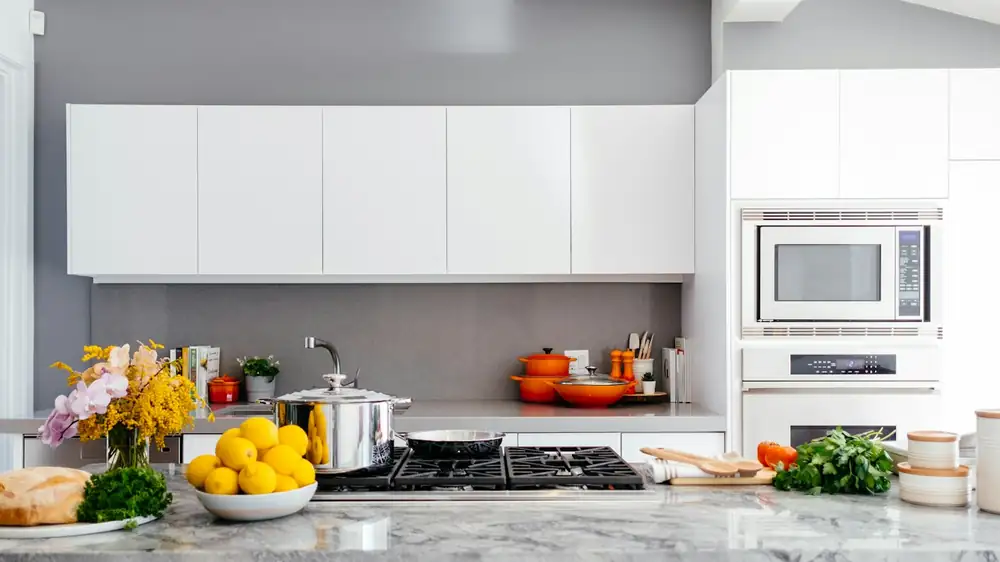
An open-plan kitchen-living room works if you contain three things separately: air (ventilation), surfaces (immediate wiping and a splatter guard), and sightlines (nothing tall or messy in view from the sofa).
What it cannot do: hide the fact that cooking happens in the room you relax in. The compromise is real, and the best you can do is reduce the impact rather than eliminate it.
The one change with the biggest effect on how the flat feels: get the drying rack out of sight. It is the most visually disruptive object in any kitchen, and it is usually the one nobody thinks about.